Córdoba Mosque Architecture | Inside the Mezquita’s Design
The Mosque–Cathedral of Córdoba is celebrated worldwide for its unique fusion of Islamic and Christian architecture. From its forest of red-and-white arches to the soaring Renaissance nave, the Mezquita is a masterpiece that tells the story of nearly 1,200 years of cultural exchange.
The Mosque-Cathedral seamlessly transitions from a grand Islamic mosque to a celebrated Christian cathedral. Key features include the expansive hypostyle hall supported by over 850 columns; iconic red-and-white horseshoe arches; an exquisitely decorated mihrab; the Renaissance cathedral nave insertion; and a bell tower that was once a minaret.
Blending Islamic and Christian design, the Mosque-Cathedral reflects Córdoba’s layered cultural history. The original mosque’s geometric precision and intricate arabesques merge with later Gothic and Renaissance modifications. This synthesis creates a harmonious architectural language that mirrors the city’s evolution and artistic legacy.
Key Architectural Features
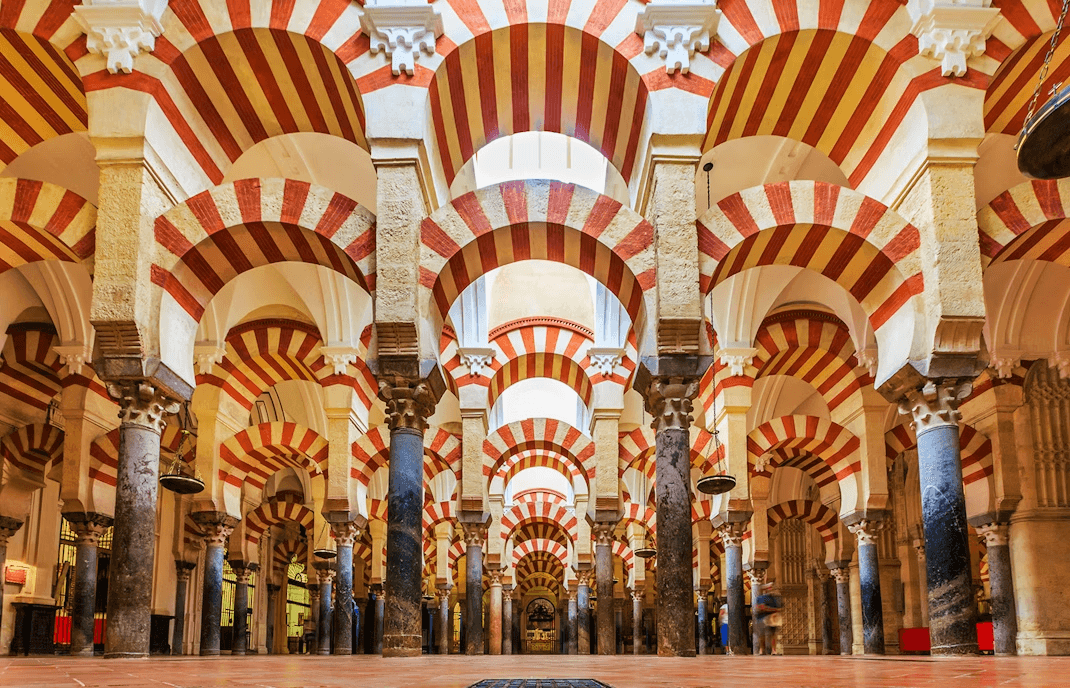
Hypostyle Hall: A vast, open space defined by an impressive array of more than 850 columns.
Horseshoe Arches: Iconic red-and-white arches that are emblematic of Moorish design, providing both visual impact and structural support.
Mihrab: An artistic focal point adorned with Byzantine mosaics and refined calligraphy, showcasing Islamic spiritual artistry.
Cathedral Nave Insertion: A later Christian addition that contrasts with yet complements the original Islamic structure.
Bell Tower: Originally a minaret, the tower was repurposed with Renaissance touches to serve as a bell tower, encapsulating the building's transformation.
The Hypostyle Prayer Hall
Columns & Arches: Over 850 marble, jasper, and granite columns support iconic double arches in alternating red and white stone, creating the illusion of an endless interior.
Effect: This design allowed for expansion while giving visitors a breathtaking sense of space and rhythm.
The Significance of the Horseshoe Arches
The horseshoe arches serve as both a decorative and functional element. Their graceful curves and distinctive red-and-white pattern not only support the structure but also stand as a symbol of the region’s Moorish heritage, bridging the aesthetic traditions of Islamic architecture with later Christian modifications.
The Bell Tower: Design and History
Once a minaret, the bell tower was transformed during the cathedral conversion. Incorporating Renaissance design elements while preserving hints of its Islamic origins, the tower now functions as a bell tower that narrates the layered history of Córdoba and its continuous adaptation over time.
The Mihrab: A Masterpiece of Islamic Art
Built under Caliph Al-Hakam II (10th century) and decorated with Byzantine mosaics and Kufic inscriptions. The horseshoe arch and domed chamber make it one of the most beautiful mihrabs in the Islamic world.
The Courtyard: Unique Design Elements
The mosque’s original open courtyard, planted with orange and palm trees, served as a space for ablutions and community gatherings. Today, it remains the main entrance area, offering shade and tranquility.
Architectural Style Fusion
The Mezquita is a rare example of layered architecture:
Islamic: Horseshoe arches, geometric patterns, ornate mihrab.
Christian: Gothic chapels, Renaissance nave, Baroque decorations.
The result is a building that feels like both a mosque and cathedral, a visual story of Córdoba’s shifting history.
Christian Additions
Cathedral Nave (16th century): A Gothic, Renaissance, and Baroque structure was built into the center of the mosque. Its soaring ceilings contrast dramatically with the low Islamic arches.
Bell Tower: Replaced the minaret in the 17th century, blending Renaissance design with remnants of the original Islamic tower.
Frequently Asked Questions
Q: What are the key architectural features of the Mosque-Cathedral?
A: The structure boasts a vast hypostyle hall, iconic horseshoe arches, an exquisitely decorated mihrab, a Renaissance cathedral nave insertion, and a bell tower that was originally a minaret.
Q: How do Islamic and Christian architectural styles blend in the building?
A: The building integrates the geometric precision and ornamentation of Islamic design with Gothic and Renaissance elements added during its conversion to a cathedral, reflecting Córdoba’s diverse history.
Q: What is the significance of the horseshoe arches?
A: The horseshoe arches are a hallmark of Moorish architecture. They provide both structural strength and an iconic aesthetic that underscores the building’s Islamic origins.
Q: What materials and techniques were used in construction?
A: Local stone and brick were used alongside traditional techniques such as mosaic work, stucco carvings, and plaster reliefs to achieve its detailed and durable ornamentation.
Q: How is the bell tower designed and what is its history?
A: Originally a minaret, the bell tower was converted during the cathedral insertion, incorporating Renaissance design elements while retaining aspects of its Islamic past.
Q: What makes the mihrab a masterpiece of Islamic art?
A: The mihrab is renowned for its intricate Byzantine mosaics and delicate calligraphy, marking it as a standout example of Islamic devotional art.
Q: Are there any unique design elements in the courtyard?
A: Yes, the Patio de los Naranjos features traditional orange groves and water features that create a peaceful, reflective outdoor space, blending Islamic garden design with later Christian influences.
Q: How does the architecture reflect the cultural history of Córdoba?
A: Every architectural element—from the horseshoe arches to the modern additions—embodies the city’s historical layers, symbolizing its transition from Islamic to Christian rule.
Q: What restoration efforts have been made to preserve the architecture?
A: Extensive restoration work has been undertaken to stabilize and restore original masonry and decorative elements, ensuring that the building’s historical and artistic integrity endures.
Q: How does the layout of the Mosque-Cathedral guide visitor experience?
A: The thoughtful design leads visitors from the expansive, columnar halls to more intimate spaces such as the mihrab and courtyard, offering a comprehensive journey through its rich history.
© Colosseum Tickets 2024